Carbon monoxide is odorless and potentially dangerous, so a dependable detector is an important part of any home safety plan. The best option depends on where you need coverage, whether you want a digital reading, and how much maintenance you are willing to handle.
We selected 10 carbon monoxide detectors under $100 with practical features such as battery backup, sealed long-life batteries, portable designs, LCD displays, and combination gas detection. Use the guide below to narrow the choices by installation type, coverage needs, and budget.
Best 10 Carbon Monoxide Detectors Under 100 Picks for 2026
Plug-In Display Pick

- Plug-in installation with 9V backup
- Digital CO level display
- 85 dB alarm with peak memory
Best For: Homes needing a visible CO reading and outage backup
Combination Safety Pick

- Smoke and CO detection in one unit
- 10-year sealed battery
- LCD shows CO and battery status
Best For: Homes wanting low-maintenance combination protection
Gas Coverage Pick
Kidde CO and Explosive Gas Alarm
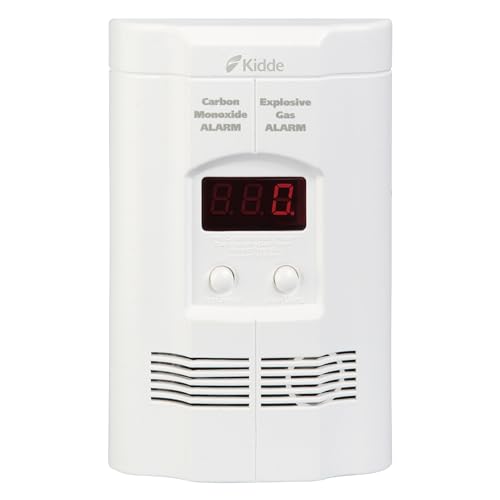
- Detects CO, natural gas, and propane
- Plug-in design with 9V backup
- Display shows CO levels or “GAS”
Best For: Gas-using homes needing broader hazard detection
Travel-Friendly Pick

- Foldable plug for travel
- Electrochemical CO sensor
- 10-year replaceable battery backup
Best For: Travelers needing compact outlet-based CO protection
Best Portable Pick
Kidde Battery-Powered CO Alarm
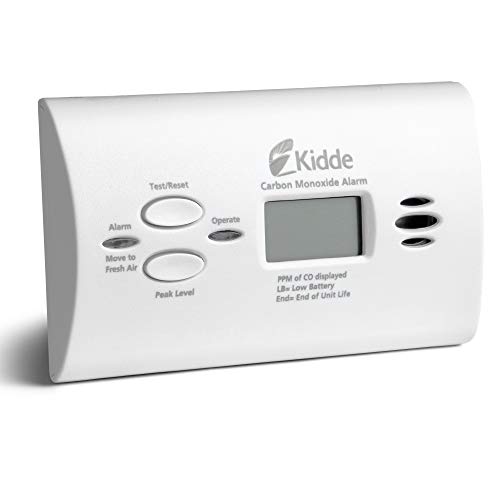
- Electrochemical sensor with 85-decibel alarm
- Two included AA batteries; no wiring required
- Peak-level memory and test-hush button
Best For: Flexible placement and power-outage monitoring
Best Plug-In Value
First Alert CO605 with Battery Backup
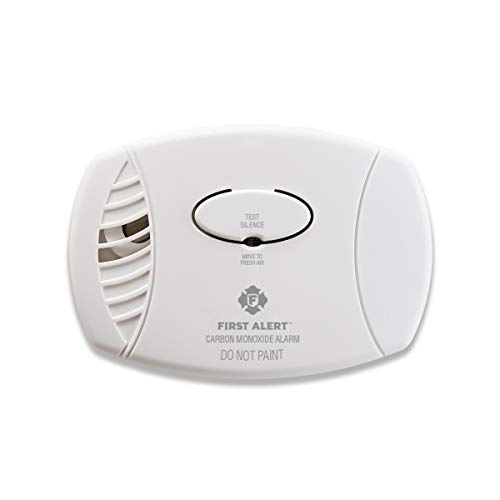
- Standard-outlet power with battery backup
- Electrochemical sensor and 85-decibel alarm
- End-of-life chirp and seven-year warranty
Best For: Simple monitoring near an available wall outlet
Best Display Features
Heiman Low-Level Digital CO Alarm
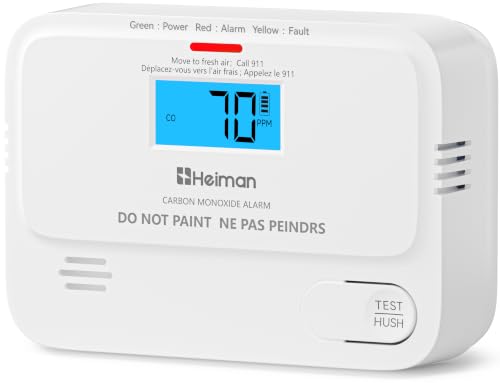
- LCD readings from 20 to 999 ppm
- 30 ppm early warning and 12-hour alarm memory
- Compact AA-powered tabletop or wall-mount design
Best For: Visible readings and low-level early warnings
Best Plug-In Pick
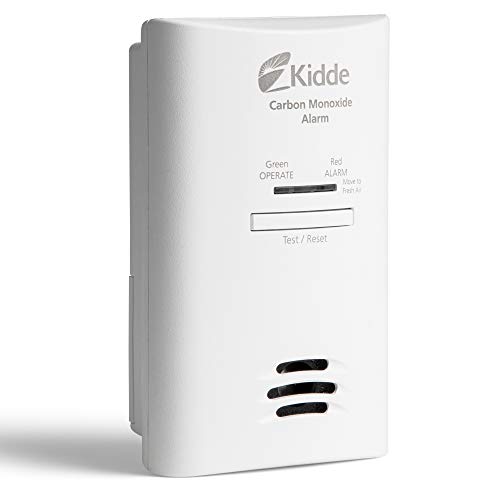
- 120V plug-in installation
- Two-AA battery backup
- 85 dB alarm and peak memory
Best For: Homes wanting simple outlet-powered monitoring
Best Multi-Pack Display
Heiman Low-Level CO Alarm 3-Pack

- Three compact detectors
- 10-year sealed lithium batteries
- LCD readings and low-level alerts
Best For: Multi-room, rental, RV, and travel coverage
Best Long-Life Display
Kidde 10-Year Digital CO Detector

- Sealed 10-year lithium battery
- Digital display updates every 15 seconds
- Wall-mount or tabletop placement
Best For: Low-maintenance single-detector coverage with readings
Plug-In Display Pick – Kidde Digital CO Detector
For shoppers comparing carbon monoxide detectors under 100, this Kidde model offers straightforward plug-in installation, a digital readout, and battery-backed protection. Its LED indicators and peak-level memory add useful status information for home monitoring.
Best For: Homeowners who want a plug-in CO detector with a digital display and backup battery.
Pros:
- Plugs into a standard 120V outlet for simple installation.
- Includes a 9V battery backup for power outages.
- Digital display shows the detected carbon monoxide level.
- 85-decibel alarm and peak-level memory provide useful alerts and history.
Cons:
- It detects carbon monoxide rather than smoke or explosive gas.
- Requires access to a standard outlet for primary operation.
This is a practical choice when a visible CO reading and plug-in setup matter more than combination detection. The 10-year limited manufacturer warranty is an additional consideration.
Combination Safety Pick – X-Sense Smoke and CO Alarm
Among carbon monoxide detectors under 100, the X-Sense SC01 stands out for combining smoke and CO monitoring in one unit. Its sealed 10-year battery and LCD provide low-maintenance protection with at-a-glance status information.
Best For: Households seeking combined smoke and carbon monoxide detection without hardwiring.
Pros:
- Combines a photoelectric smoke sensor with an electrochemical CO sensor.
- Sealed 10-year lithium battery avoids routine battery replacement.
- LCD shows real-time CO levels, battery level, and working status.
- Includes mounting hardware and requires no rewiring.
Cons:
- It is battery-powered and not hardwired.
- The supplied warranty is five years, with a 60-day money-back guarantee.
Choose this model if consolidating two types of protection into one wall- or ceiling-mounted alarm is a priority. Its listed UL 217 and UL 2034 certifications add useful specification context.
Gas Coverage Pick – Kidde CO and Explosive Gas Alarm
For carbon monoxide detectors under 100 that cover more than CO, this Kidde alarm also detects explosive natural gas and propane. It plugs into a standard outlet, displays CO levels or “GAS,” and includes backup power for outages.
Best For: Homes that use natural gas or propane and want combined CO and explosive-gas monitoring.
Pros:
- Detects carbon monoxide plus explosive natural gas and propane.
- Plugs into a standard 120V outlet for easy setup.
- 9V battery backup helps maintain protection during power failures.
- Digital display shows CO levels or indicates “GAS,” with peak-level memory.
Cons:
- The supplied notes do not specify a manufacturer warranty.
- Primary operation depends on access to a standard outlet.
This model is more specialized than a CO-only alarm, making its added gas detection valuable for compatible homes. Its 85-decibel alarm and LED status indicators support clear alerting and monitoring.
Travel-Friendly Pick – Siterlink Plug-In CO Detector
Among carbon monoxide detectors under 100, this compact Siterlink model is designed for flexible use at home or while traveling. It combines plug-in operation with a replaceable 10-year battery backup, an electrochemical sensor, and a foldable plug.
Best For: Travelers and homeowners who want a compact, portable CO alarm for outlets in homes, hotels, or other accommodations.
Pros:
- Foldable plug and compact design make it easier to pack for travel.
- Electrochemical sensor is designed for responsive CO detection.
- 10-year replaceable battery backup supports operation during outages.
- Soft breathing-style green light is intended to be sleep-friendly.
Cons:
- The supplied notes do not mention a digital CO display or alarm volume.
- It is a CO detector rather than a smoke or gas combination alarm.
- The product notes describe it as battery powered despite its AC plug-in design.
This is a sensible option when portability and simple setup are central to the buying decision. Its foldable plug and travel-oriented design distinguish it from larger, fixed household alarms.
Best Portable Pick – Kidde Battery-Powered CO Alarm
For shoppers comparing carbon monoxide detectors under 100, this Kidde alarm is a practical battery-powered option for homes that need flexible placement and monitoring during a power outage. Its electrochemical sensor, 85-decibel alarm, LED indicators, and peak-level memory provide useful status and alert information.
Best For: Homes, bedrooms, or travel situations where a portable, no-wiring CO alarm is preferred.
Pros:
- Runs on two included AA batteries, so it continues operating during power failures.
- Portable wall-mount or tabletop design requires no wiring.
- Includes peak-level memory, test-hush button, LED indicators, and an 85-decibel alarm.
- UL listed and backed by a 10-year limited manufacturer warranty on the alarm.
Cons:
- Battery performance and replacement timing depend on the AA batteries used.
- It does not provide the real-time digital CO readings offered by a display-equipped model.
This Kidde model is a straightforward choice when portability and outage protection matter most. The peak memory adds useful context after an alert, while the simple controls keep routine testing uncomplicated.
Best Plug-In Value – First Alert CO605 with Battery Backup
Among carbon monoxide detectors under 100, the First Alert CO605 suits buyers who want a simple outlet-powered alarm with battery backup. It uses an electrochemical sensor, sounds an 85-decibel alarm at dangerous levels, and includes a single test/silence button for easy operation.
Best For: Homes with convenient wall outlets that want continuous monitoring with backup power.
Pros:
- Plugs into a standard outlet and includes battery backup for power failures.
- Electrochemical sensor is designed to detect CO regardless of room placement.
- Single test/silence button and low-battery signal mute simplify operation.
- Includes an end-of-life chirp and a seven-year limited warranty.
Cons:
- Outlet-based design limits placement compared with fully battery-powered alarms.
- The supplied details do not indicate a digital display or CO-level memory.
The CO605 is a sensible pick for straightforward, set-and-forget monitoring near an outlet. Its battery backup adds reassurance during outages, while the end-of-life signal helps indicate when replacement is needed.
Best Display Features – Heiman Low-Level Digital CO Alarm
For shoppers seeking carbon monoxide detectors under 100 with more detailed status information, this compact Heiman model combines AA battery operation with a real-time LCD display. It shows readings from 20 to 999 ppm, offers a 30 ppm early warning, and records alarm activity for up to 12 hours.
Best For: Buyers who want low-level CO alerts, visible readings, and portable placement around a home or temporary lodging.
Pros:
- LCD displays live CO readings from 20 to 999 ppm.
- Provides a 30 ppm early warning, 85-decibel danger alarm, and 12-hour alarm memory.
- Runs on two replaceable AA batteries and supports tabletop or wall-mount installation.
- Compact, portable design is suitable for homes, hotels, rentals, RVs, and cabins.
Cons:
- Not a plug-in alarm, so batteries must be replaced during its service life.
- Performance is specified for 40°F to 100°F and may be compromised outside that range.
- Not intended for garages, workshops, or placement directly under vehicle exhaust pipes.
This Heiman detector stands out for shoppers who want more information than a basic alarm provides. Its display and graded low-level warning system can help users gauge conditions, while its small battery-powered design makes placement especially flexible.
Best Plug-In Pick – Kidde Plug-In CO Detector
For shoppers comparing carbon monoxide detectors under 100, the Kidde KN-COB-DP2 is a straightforward plug-in option. It connects to a standard 120V outlet, includes two AA batteries for backup during power outages, and provides an 85-decibel alarm.
Best For: Homes that want simple outlet-powered CO monitoring with battery backup.
Pros:
- Plugs into a standard 120V outlet for easy installation
- Two-AA battery backup continues protection during outages
- Peak Level Memory records the last detected CO level or test
- Test-Hush button supports testing and silencing false alarms
Cons:
- Requires access to a suitable wall outlet
- Does not include a digital CO readout
This is a practical choice if you prefer a familiar plug-in design and want backup power without wiring. Its LED indicators and loud alarm keep the status easy to monitor, though shoppers seeking displayed CO readings may prefer a digital model.
Best Multi-Pack Display – Heiman Low-Level CO Alarm 3-Pack
Among carbon monoxide detectors under 100, this Heiman three-pack stands out for broad coverage and low-level monitoring features. Each compact alarm has a sealed 10-year lithium battery, a live LCD display, tabletop or wall-mount installation, and an 85-decibel danger alarm.
Best For: Homes, rentals, RVs, or travel use where multiple compact detectors and visible CO readings are useful.
Pros:
- Three detectors help cover multiple rooms or floors
- Sealed 10-year battery avoids routine battery replacement
- LCD displays readings from 20 to 999 ppm with graded alerts
- Supports tabletop placement and wall mounting
Cons:
- Not intended for garages, workshops, or placement directly under vehicle exhaust
- Specified operating range is 40°F to 100°F
- Initial activation includes an automatic 100-second warm-up
The Heiman pack is especially useful when you want distributed coverage plus more information than a basic alarm provides. Its portable design suits travel and RV use, while the sealed battery reduces maintenance; placement and temperature limits should be followed carefully.
Best Long-Life Display – Kidde 10-Year Digital CO Detector
For carbon monoxide detectors under 100 that combine long-term convenience with a visible readout, the Kidde C3010D is a strong option. It uses a sealed 10-year lithium battery, updates its digital display every 15 seconds, and can be wall-mounted or placed on a tabletop.
Best For: Homeowners who want a single low-maintenance detector with digital CO-level information.
Pros:
- 10-year lithium battery requires no routine replacement
- Digital display updates every 15 seconds
- Portable wall-mount or tabletop design needs no wiring
- Three LED colors show normal, CO, and replacement status
Cons:
- Sold as a single detector
- Does not offer the multi-unit coverage of a pack
This Kidde model balances easy installation and long service life with useful status information. Its electrochemical sensor, 85-decibel alarm, peak memory, and 10-year limited warranty make it a sensible set-and-monitor choice for a primary living area or hallway.
How We Picked the Best Carbon Monoxide Detectors Under 100
We focused on detectors priced below $100 that offer useful protection for bedrooms, hallways, utility areas, apartments, and travel. Our selection includes plug-in models with battery backup, fully battery-powered alarms, compact portable units, and combination detectors that also monitor natural gas or propane.
We also considered alarm volume, display availability, battery design, installation requirements, certification claims, and replacement convenience. A detector should be easy to test, simple to understand, and appropriate for the location where it will be installed. Always follow the manufacturer’s placement instructions and local safety guidance.
Quick Comparison
| Type | Best For | Main Advantage | Trade-Off |
|---|---|---|---|
| Plug-in with battery backup | Bedrooms and hallways near outlets | Continuous power with backup protection | Requires a suitable outlet |
| Sealed 10-year battery | Low-maintenance installation | No routine battery replacement | Typically replaced when the battery expires |
| Replaceable-battery portable alarm | Renters, travel, and flexible placement | Easy to move and maintain | Requires battery checks |
| Combination gas and CO alarm | Homes using gas appliances | Monitors more than carbon monoxide | May cost more and need careful placement |
Key Buying Factors for Carbon Monoxide Detectors Under 100
Power and Battery Life
Plug-in detectors are convenient where outlets are available, but battery backup is valuable during outages. Sealed 10-year models reduce maintenance, while AA or 9V battery units make replacement straightforward and can be easier to relocate.
Display and Alarm Features
A digital display can show current or peak carbon monoxide readings, helping you understand changes rather than relying only on an alarm. Look for clear status indicators, a test or reset button, low-battery warnings, and an alarm loud enough to wake sleeping occupants.
Installation and Placement
Choose a design that suits the room and your living situation. Renters may prefer portable or plug-in options, while homeowners may value long-life sealed units. Install detectors on every level and outside sleeping areas as recommended by safety authorities, and avoid placing them where steam, dust, or drafts may interfere.
Certification and Replacement
Check the product listing and packaging for applicable safety certification, such as UL 2034 for carbon monoxide alarms. Test alarms regularly, keep them unobstructed, and replace the entire detector according to its stated service life—even if it still appears to work.
Who Should Buy Which Carbon Monoxide Detectors Under 100?
Choose a plug-in model with battery backup if you want straightforward installation and dependable operation near an outlet. Choose a sealed 10-year detector if minimizing battery maintenance is your priority. Choose a replaceable-battery portable alarm for apartments, travel, seasonal spaces, or locations without a convenient outlet. Choose a combination gas and CO detector if your home uses natural gas or propane and you want broader monitoring from one device.
For larger homes, buying several compatible alarms is often more useful than relying on one premium unit. Position them strategically, test them on schedule, and treat any alarm as an instruction to leave the area and follow local emergency guidance.