Shoe cabinets with doors keep footwear organized while hiding visual clutter in busy entryways, bedrooms, and mudrooms. The right model can also make better use of narrow wall space than an open rack.
This roundup compares 10 options across farmhouse, modern, fluted, slatted, bamboo, and classic designs, with attention to capacity, shelf flexibility, dimensions, and everyday convenience.
Best 10 Shoe Cabinets with Doors Picks for 2026
Classic Entryway Pick
White Cross-Molding Shoe Cabinet

- Stores 18–24 pairs across six levels
- Three adjustable shelves for varied footwear
- Cross-molding doors with sturdy metal legs
Best For: Tall, flexible entryway storage with a traditional look
Farmhouse Value Pick
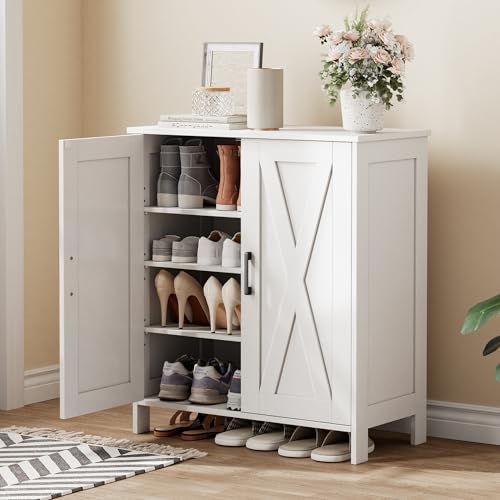
- Five levels hold 15+ pairs
- Three adjustable shelves
- Wall anchor included for stability
Best For: Compact farmhouse-style entryways and multipurpose storage
Ventilated Capacity Pick
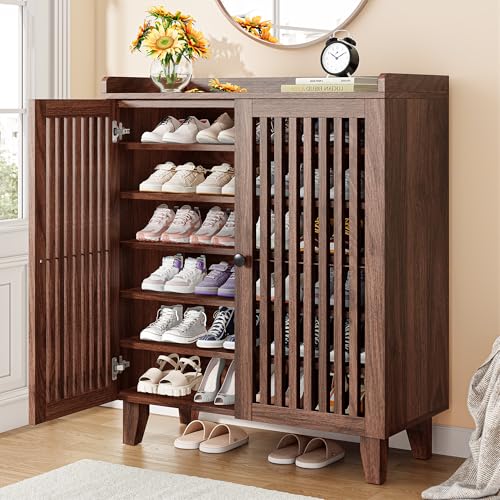
- Holds approximately 24–35 pairs
- Adjustable or removable shelves fit boots
- Slatted doors promote airflow
Best For: Large shoe collections needing ventilated, flexible storage
Family Storage Pick
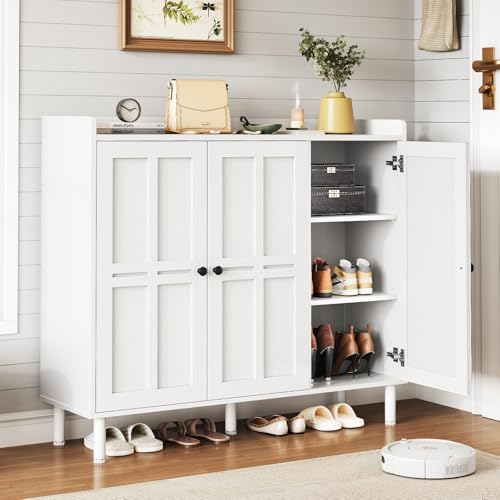
- Stores about 30 pairs
- Separate section for boots and heels
- Countertop holds keys and décor
Best For: Larger households needing wide, high-capacity entryway storage
Tall Capacity Pick
Tribesigns 8-Tier Shoe Cabinet

- Eight adjustable tiers hold up to 32 pairs
- Acrylic doors provide dust protection and visibility
- Tall 67.5-inch design saves floor space
Best For: Households needing high-capacity vertical storage
Large Family Storage Pick
VividVibe 40-Pair Shoe Cabinet

- Holds up to 40 pairs in two joined cabinets
- Adjustable shelves fit boots and men's size 12 shoes
- Push-to-open doors and anti-tipping hardware
Best For: Families needing wide, flexible entryway storage
Compact Style Pick

- Stores approximately 20–25 pairs on five shelves
- Walnut fluted doors add decorative texture
- Robot-vacuum clearance and anti-tip kit included
Best For: Style-focused shoppers with moderate shoe storage needs
Best Overall
Fluted 6-Tier Walnut Shoe Cabinet

- Six adjustable shelves for varied footwear
- Fluted doors and walnut finish suit modern entryways
- Open bottom shelf keeps everyday shoes accessible
Best For: Versatile entryway storage with decorative appeal
Best Flat-Shelf Design

- Stores approximately 18–24 pairs
- Flat shelves simplify shoe access
- Elevated legs and open shelf improve convenience
Best For: Easy-access shoe organization in entryways and hallways
Best for Large Collections

- Holds up to 40 pairs
- Removable shelves fit taller footwear
- Wide desktop adds convenient display and drop-zone space
Best For: Large households and extensive shoe collections
Classic Entryway Pick – White Cross-Molding Shoe Cabinet
If you need shoe cabinets with doors that combine concealed storage with a traditional accent, this 45.3-inch white cabinet is a practical choice. Its six-level layout includes five hidden shelves and one open shelf, with three adjustable shelves for accommodating different footwear.
Best For: Households that need tall, flexible entryway storage for up to 18–24 pairs of shoes, including boots and high heels.
Pros:
- Stores approximately 18–24 pairs across six levels.
- Three adjustable shelves accommodate varying shoe heights.
- Cross-molding doors, black knobs, and metal legs suit modern or classic interiors.
- Adjustable feet help stabilize the cabinet and protect floors.
Cons:
- At 68 pounds, it may require two or three people to assemble.
- The 13.8-inch depth may not suit every oversized shoe collection.
Choose this model when vertical capacity and a decorative white finish matter most. The combination of enclosed and open storage also makes it useful for frequently worn footwear.
Farmhouse Value Pick – White Barn-Door Shoe Cabinet
For shoppers seeking shoe cabinets with doors in a compact farmhouse style, this white cabinet offers five levels of organized storage behind two barn-style doors. Three adjustable shelves let you tailor the interior for flats, sneakers, boots, and other daily essentials.
Best For: Smaller entryways, hallways, bedrooms, or closets needing storage for 15 or more pairs without a tall, oversized footprint.
Pros:
- Three adjustable shelves provide flexible storage for different shoe sizes.
- Two barn doors and black U-shaped handles add farmhouse character.
- Can also store bags, accessories, and everyday items.
- Includes a wall-anchoring device for added stability.
Cons:
- Its approximately 31.5-inch height provides less capacity than taller cabinets.
- Particleboard construction may feel less substantial than heavier wood-based designs.
This is a sensible option when style, moderate capacity, and a relatively low profile are priorities. The adjustable interior and multipurpose storage make it more versatile than a shoe-only rack.
Ventilated Capacity Pick – Walnut Slatted Shoe Cabinet
This walnut cabinet is among the roomier shoe cabinets with doors, offering six tiers and an estimated capacity of 24–35 pairs. Its slatted doors support airflow, while three adjustable or removable shelves help organize everything from flats to tall boots.
Best For: Larger shoe collections and shoppers who want mid-century styling, boot flexibility, and ventilated enclosed storage.
Pros:
- Holds approximately 24–35 pairs, depending on shoe size and style.
- Three adjustable or removable shelves accommodate tall boots.
- Slatted doors allow air circulation to help keep shoes fresh.
- Solid wood legs and an anti-tip kit support everyday stability.
Cons:
- At 14.7 inches deep, it needs slightly more floor depth than several compact models.
- Two-person assembly is expected to take approximately 40 minutes.
Consider this cabinet if capacity and ventilation are more important than the smallest possible footprint. Its walnut finish and slatted design also make it a furniture-like addition to an entryway or living room.
Family Storage Pick – Three-Door White Shoe Cabinet
When comparing shoe cabinets with doors for a busy household, this wide three-door model emphasizes capacity and accessibility. It stores about 30 pairs, includes a separate section for boots and heels, and provides a countertop for keys, wallets, plants, or décor.
Best For: Families or larger households that need broad entryway storage, a dedicated high-shoe section, and a useful drop zone.
Pros:
- Stores approximately 30 pairs, depending on shoe size.
- Separate door makes room for boots, heels, and other high-top footwear.
- Six shelves and adjustable interior storage improve organization.
- Soft-closing hinges, adjustable metal legs, and a wall-friendly raised base add practical convenience.
Cons:
- At 43.8 inches wide and 86.3 pounds, it requires substantial floor space and careful assembly.
- The broad three-door design may be too large for narrow entryways.
This model is a strong fit when maximum capacity and a functional top surface outweigh compact dimensions. Its cross-molding doors also give the wide cabinet a farmhouse-inspired decorative finish.
Tall Capacity Pick – Tribesigns 8-Tier Shoe Cabinet
If vertical storage is your priority, this Tribesigns shoe cabinet with doors makes efficient use of wall space while keeping footwear protected from dust. Its eight shelves and adjustable panels accommodate up to 32 pairs, with a tall freestanding design suited to entryways, hallways, and closets.
Best For: Households needing high-capacity, space-saving shoe storage.
Pros:
- Eight adjustable tiers hold up to 32 pairs, from slippers to boots.
- Acrylic doors help protect shoes from dust while keeping them visible.
- Engineered-wood construction, waterproof boards, and gold handles add durability and style.
- Tools and instructions are included for assembly.
Cons:
- At 67.5 inches tall and 105 pounds, it may be cumbersome to position.
- The tall format may not suit rooms with limited vertical clearance.
This is a practical choice when you want maximum shoe capacity without taking up much floor width. Confirm the dimensions and secure the cabinet appropriately before use.
Large Family Storage Pick – VividVibe 40-Pair Shoe Cabinet
For wide entryways and larger collections, this VividVibe shoe cabinet with doors combines two joined cabinets into a 62.52-inch-wide storage unit. Its adjustable shelves are designed for different footwear sizes, including boots and men’s size 12 shoes, while the enclosed base helps block dust.
Best For: Families or large households that need broad, flexible shoe storage.
Pros:
- Stores up to 40 pairs across eight adjustable shelves.
- Accommodates sneakers, flats, heels, ankle boots, tall boots, and men’s size 12 shoes.
- Push-to-open doors create a handle-free look for busy hallways.
- Includes anti-tipping hardware and a thick tabletop for display or everyday items.
Cons:
- The 62.52-inch width requires substantial wall space.
- Its two-piece, 119-pound set may take more effort to assemble and move.
This cabinet stands out for capacity and versatility, functioning as shoe storage, a console, or a credenza. Measure your available wall carefully, and use the included anti-tip hardware for added stability.
Compact Style Pick – Walnut Fluted Shoe Cabinet
This walnut shoe cabinet with doors offers a compact footprint and a decorative fluted front for entryways, hallways, bedrooms, and living rooms. Five adjustable shelves provide room for approximately 20–25 pairs, while the top surface offers a convenient spot for daily essentials.
Best For: Style-conscious shoppers seeking moderate shoe storage in a compact cabinet.
Pros:
- Five adjustable shelves provide space for about 20–25 pairs.
- Fluted doors and a walnut finish complement modern, mid-century, and minimalist decor.
- Bottom clearance allows a robot vacuum to pass underneath.
- Includes an anti-tip kit and clearly labeled assembly parts.
Cons:
- Its capacity is lower than larger cabinets, making it less suitable for extensive collections.
- At 14.6 inches deep, taller footwear may require shelf adjustments.
This is a balanced option when appearance matters as much as everyday organization. Its adjustable interior can handle varied footwear and accessories, but shoppers with large collections may need additional storage.
Best Overall – Fluted 6-Tier Walnut Shoe Cabinet
If you want shoe cabinets with doors that add concealed storage without looking bulky, this 43.7-inch walnut cabinet is a strong all-around option. Its six adjustable shelves accommodate different footwear, while the open bottom shelf keeps frequently worn slippers accessible.
Best For: Entryways needing versatile, enclosed shoe storage with a modern decorative finish.
Pros:
- Six adjustable shelves fit boots, heels, sneakers, and dress shoes.
- Fluted swing doors, black handles, and a walnut finish create a refined modern look.
- Open bottom storage and a spacious top provide convenient everyday access.
- Water-resistant engineered wood and a reinforced base support easy maintenance and stability.
Cons:
- Assembly is required.
- At 14.6 inches deep, it may need more floor space than a slimmer cabinet.
With customizable interior storage and a polished fluted-door design, this is a practical choice when appearance and capacity matter equally. The freestanding format also makes placement straightforward.
Best Flat-Shelf Design – 6-Tier White Shoe Cabinet
For shoppers comparing shoe cabinets with doors, this flat-shelf model prioritizes easy access and organized storage. Six tiers and two doors can hold approximately 18–24 pairs, while adjustable shelves help accommodate footwear of different heights.
Best For: Households that prefer flat shelves for straightforward shoe placement and retrieval.
Pros:
- Six-tier storage is designed to hold about 18–24 pairs of shoes.
- Flat shelves make shoes easier to store and retrieve than slanted shelves.
- Two adjustable shelves allow space for boots, sneakers, and other footwear.
- Open bottom shelf and 3.9-inch legs provide quick access and easier floor cleaning.
Cons:
- Assembly is required.
- The 30.7-inch width and 14.6-inch depth require a moderately sized spot.
This cabinet combines a clean white finish with useful everyday details, including elevated legs, an open lower shelf, and gold round handles. It is a sensible fit for an entryway, hallway, or living room where accessible flat storage is preferred.
Best for Large Collections – 8-Tier Bamboo Shoe Cabinet
If capacity is your priority, these shoe cabinets with doors include an eight-tier bamboo option rated to hold up to 40 pairs. Its removable shelves create flexibility for taller footwear, while the 46-inch-wide design offers substantial storage in a freestanding format.
Best For: Large shoe collections that need flexible compartments and a useful entryway surface.
Pros:
- Accommodates up to 40 pairs of shoes.
- Removable shelves can be rearranged for boots and taller footwear.
- Open desktop provides space for keys, wallets, plants, or décor.
- Bamboo construction, rounded exposed edges, and a bottom open compartment add practical touches.
Cons:
- At 46 inches wide, it needs more wall space than the other options.
- Assembly takes approximately 40–60 minutes.
The combination of high capacity, detachable shelving, and an open desktop makes this cabinet especially useful for busy entryways or closets. Its 13-inch depth helps limit front-to-back projection, though the wide footprint should be measured carefully.
How We Picked the Best Shoe Cabinets with Doors
We evaluated these cabinets by comparing their advertised storage capacity, shelf layout, door design, dimensions, materials, and suitability for common entryway spaces. We also considered whether shelves are adjustable or removable, since footwear varies considerably in height. Models with enclosed storage earned attention for helping contain visual clutter and keeping shoes less exposed to dust.
Because product specifications can vary by size and configuration, check the current listing carefully before ordering. Confirm the external dimensions, interior shelf measurements, assembly requirements, and stated shoe capacity for your household’s footwear.
Quick Comparison
| Best For | Look For | Why It Matters |
|---|---|---|
| Small entryways | Shallow depth and vertical storage | Preserves walking space |
| Families or large collections | Six to eight tiers and removable shelves | Provides more usable capacity |
| Decor-focused rooms | Fluted, slatted, barn-door, or cross-molding fronts | Coordinates with existing décor |
| Tall boots and bulky shoes | Adjustable shelf spacing | Accommodates uneven footwear heights |
Key Buying Factors for Shoe Cabinets with Doors
Measure the Available Space
Measure width, height, and depth, then leave enough clearance for doors to open and for people to pass comfortably. Tall cabinets may maximize capacity, but they should be secured to the wall when recommended by the manufacturer.
Check Capacity and Shelf Flexibility
Advertised pair counts are useful estimates, but large sneakers, boots, and high-top shoes occupy more room than slim flats. Adjustable or removable shelves make a cabinet more adaptable and can prevent wasted vertical space.
Choose the Right Door and Finish
Solid doors provide the most concealed appearance, while slatted, fluted, and paneled fronts add texture. Walnut and wood-look finishes can warm an entryway; white cabinets generally make compact rooms feel lighter. Consider how easily the surface will show dust, fingerprints, or scuffs.
Consider Ventilation and Maintenance
Enclosed storage is convenient, but shoes should be reasonably dry before being put away. Slatted doors may offer more airflow than fully solid fronts. Look for smooth, wipeable surfaces and hardware that feels sturdy enough for frequent use.
Who Should Buy Which Shoe Cabinets with Doors?
Choose a slim, vertically oriented cabinet if you live in an apartment or have a narrow hallway. Families and shoppers with extensive collections should prioritize eight-tier layouts, wider cabinets, or removable shelves. Farmhouse and cross-molding designs suit traditional interiors, while fluted, slatted, and minimalist cabinets work well in modern spaces. Bamboo is a practical choice for shoppers who prefer a lighter natural material and freestanding construction.
Whichever style you choose, prioritize a secure fit, usable interior dimensions, and shelf flexibility over the listed pair count alone. Those details determine whether your new shoe cabinet remains organized after the first few weeks of daily use.